

- Why Register a Company in Tanzania?
- Tanzania Registrar of Companies
- Tanzania Registered Companies
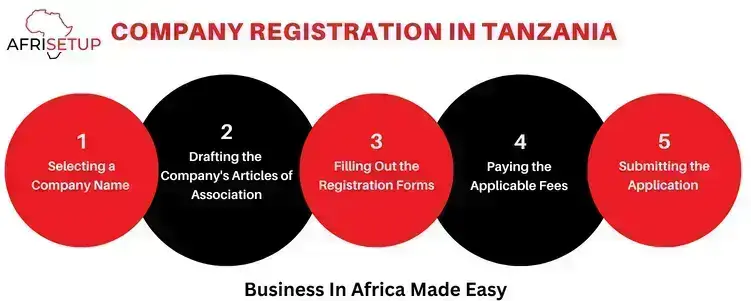
- How to Register a Company in Tanzania
- Tax and Compliance Requirements
- How to check if a company is legally registered in Tanzania?
- Tanzania Investment Centre Incentives, Special Economic Zones & Residence Permits
Company registration in Tanzania offers local and foreign investors an opportunity to establish a business in one of East Africa’s fastest-growing economies. Tanzania allows up to 100% foreign ownership in most sectors, enabling international entrepreneurs to invest with confidence. Businesses can be incorporated online through the Business Registrations and Licensing Agency (BRELA), while foreign investors are generally free to repatriate profits since the country maintains a liberal foreign exchange regime. Company incorporation usually takes between 3 to 14 business days, with tax registration and bank account setup typically completed within 2 to 3 weeks.
Understanding the procedure for registering a company in Tanzania is essential for ensuring a smooth and compliant business setup. As a member of the East African Community (EAC) and the Southern African Development Community (SADC), Tanzania provides businesses with access to a large regional market and benefits from numerous double taxation agreements. This guide explains the available business structures, the BRELA registration process, required documents, estimated registration costs, tax obligations, and the investment incentives and residence permit requirements that foreign investors should consider before registering a business in Tanzania.
| Authority | BRELA (ORS portal) | Foreign ownership | Up to 100% |
| Incorporation | 3-14 business days | End-to-end | 2-3 weeks (foreign-owned) |
| Corporate tax | 30% (VAT 18%) | Min. paid-up capital | None for an LLC |
Free download
The Tanzania Company Registration Checklist Guide (2026)
Every step, form, document and fee in one printable 2-page PDF plus the foreign-investor essentials (permits, exchange controls, repatriation) most guides leave out.
Why Register a Company in Tanzania?
Company registration in Tanzania gives investors access to one of East Africa’s fastest-growing economies, supported by a stable business environment and attractive investment opportunities. Key benefits include:
- 100% foreign ownership – Foreign investors can fully own a limited liability company without requiring a Tanzanian shareholder.
- Free repatriation of profits – Tanzania has no general foreign exchange controls, allowing investors to transfer profits, dividends, and capital abroad in accordance with applicable regulations.
- Access to regional markets – As a member of the East African Community (EAC) and the Southern African Development Community (SADC), Tanzania provides access to a large regional market.
- Double taxation agreements – Tanzania has tax treaties with more than 20 countries, including the UK, Canada, Germany, Norway, and India, helping to reduce the risk of double taxation.
- Rich natural resources and growing industries – The country offers investment opportunities in mining, natural gas, agriculture, tourism, manufacturing, and infrastructure.
- Investment incentives – Eligible investors may benefit from incentives offered through the Tanzania Investment Centre (TIC) and Special Economic Zones (SEZs) or Export Processing Zones (EPZs), including tax incentives, VAT relief, and customs duty exemptions, subject to qualification requirements.
Tanzania Registrar of Companies
The Business Registrations and Licensing Agency (BRELA) is the government entity responsible for overseeing company registration in Tanzania. It operates under the Ministry of Industry and Trade and plays a key role in implementing business legislation in Tanzania.
BRELA is responsible for:
- Registering companies and business names under the Companies Act (Cap 212) and Business Names Act (Cap 213)
- Managing intellectual property, including trademarks and patents
- Issuing industrial licenses for businesses and industries
- Maintaining official records and processing post-registration changes
- Ensuring legal compliance of registered entities
To complete business registration in Tanzania, individuals or entities must follow the procedures and regulations established by BRELA under the Companies Act.
Tanzania Registered Companies
BRELA registers both companies and business names, but only certain structures are incorporated as companies.The following are companies registered in Tanzania under the Companies Act (Cap 212) and have a separate legal identity. They receive either a Certificate of Incorporation or a Certificate of Compliance:
- Private Limited Company (Ltd)– Owned by private shareholders; liability is limited to the shares held.
- Public Limited Company (PLC) – Can offer shares to the public; liability is limited.
- Company Limited by Guarantee – Usually for non-profit or charitable purposes; members’ liability is limited to a guaranteed amount.
- Unlimited Company – Rare; members have unlimited liability.
- Foreign Company (Branch) – Incorporated outside Tanzania but registered locally to operate; issued a Certificate of Compliance.
Note: For registration purposes, companies are classified as Local (incorporated in Tanzania) or Foreign (incorporated abroad but registered locally). Even if owned by Tanzanians, overseas-incorporated firms are treated as foreign. If you plan to form a joint venture with a Tanzanian partner, you must complete the registration process through the online Business Registrations and Licensing Agency (BRELA) portal.
To register a sole proprietorship in Tanzania, as well as partnerships and other business types, the business must be registered as a business name with BRELA. They receive a Certificate of Business Name Registration and do not have separate legal identity or limited liability protection.
Choosing Your Business Structure
| Private Ltd (subsidiary) | Foreign Co (Branch) | Rep. Office | |
| Legal status | Separate Tanzanian entity | Extension of parent | Liaison only |
| Certificate | Incorporation | Compliance | n/a |
| Foreign ownership | 100% | 100% | n/a |
| Liability | Limited to company | Parent liable | n/a |
| Can earn revenue | Yes | Yes | No |
| Best for | Most foreign investors | Extending a parent | Testing the market |
For most foreign investors the choice is between a local subsidiary, a branch (foreign company), or a representative
office.
How to Register a Company in Tanzania
Online company registration in Tanzania allows individuals and businesses to complete the process electronically through the Business Registrations and Licensing Agency (BRELA) Online Registration System (ORS). To get started, you must first create a user account on the BRELA ORS platform and activate it through email verification. Once your account is active, log in and follow the e-services section to begin the company registration process.
Step 1: Choose a Business Type
Decide on the legal structure that best suits your business activities. Common business structures in Tanzania include:
- Private Limited Company
- Public Limited Company
- Company Limited by Guarantee
- Foreign Branch Office
The structure you choose will determine the registration requirements, management structure, and legal obligations of the business.
Step 2: Conduct a Company Name Search and Reservation
Carry out a company name search through BRELA’s Online Registration System to confirm that your preferred business name is available and not already registered by another entity. Once approved, reserve the company name before proceeding with incorporation.
For foreign companies opening a branch in Tanzania, the branch normally operates using the parent company’s registered name.
Step 3: Prepare the Required Company Documents
After reserving the company name, prepare the incorporation documents required by BRELA. These typically include:
- Memorandum and Articles of Association – A properly drafted document outlining the company’s objectives, internal rules, and management structure.
- Form 14A – Application for registration containing details of directors, shareholders, company secretary, and registered office address.
- Declaration of Compliance (Form 14b) – Signed by an advocate, notary public, or authorized legal professional confirming that all legal requirements have been met.
- Copies of Identification Documents – Valid passports, national IDs, or other accepted identification documents for all shareholders and directors.
- Registered Office Address Details – The official physical address of the company in Tanzania.
Step 4: Notarization and Authentication of Documents
Certain incorporation documents may need to be notarized and authenticated by a notary public or Commissioner for Oaths to confirm their legality and authenticity, especially for foreign shareholders or directors.
Step 5: Submit the Application and Pay Registration Fees
Upload and submit all required documents through BRELA ORS and pay the prescribed government registration fees. The registration fees are usually calculated based on the company’s authorized share capital. Keep copies of payment receipts and application confirmations for future reference.
Step 6: Verification and Approval by BRELA
BRELA reviews and verifies the submitted application and supporting documents. If the application satisfies all legal requirements, the Registrar will approve the registration and issue:
- A Certificate of Incorporation for local companies, or
- A Certificate of Compliance for foreign companies.
The review and approval process of company registration in Tanzania typically takes 3 to 14 business days depending on the completeness of the application and the workload at BRELA.
Step 7: Register for Tax Identification Number (TIN)
After incorporation, the company must register with the Tanzania Revenue Authority (TRA) to obtain a Taxpayer Identification Number (TIN). The TIN is required for tax compliance, opening a business bank account, and conducting commercial activities in Tanzania.
Step 8: Obtain Business Licenses and Sector Permits
Depending on the nature of your business activities, you may need additional licenses, permits, or approvals from government authorities of Tanzania. The requirements vary by industry, including finance, tourism, construction, import and export, telecommunications, and healthcare.
Registering a Foreign Branch in Tanzania
A foreign company can establish a branch in Tanzania by registering with BRELA through its online registration system.
Steps to Register a Foreign Branch
- Create an account on the BRELA Online Registration System (ORS).
- Upload certified copies of the company’s constitutional documents, such as its Memorandum and Articles of Association.
- Provide a certified copy of the company’s certificate of incorporation.
- Submit the latest audited financial statements or other recent company accounts.
- Complete the required registration forms, including details of the company’s registered office, directors, and local representatives in Tanzania.
- Download, print, and sign the required forms, including the Ethics and Integrity Pledge.
- Scan and upload all signed forms and supporting documents.
- Generate a payment order through the system.
- Pay the applicable registration and compliance fees.
- Once the application is approved, receive the Certificate of Compliance confirming the branch is legally registered in Tanzania.
Requirements for Company Registration in Tanzania
The documents required for company registration in Tanzania vary slightly depending on whether the company is locally or foreign-owned. For foreign companies, here are the requirements:
- A certified copy of the parent company’s Certificate of Incorporation.
- A certified copy of the parent company’s constitutional documents, such as the Memorandum and Articles of Association or equivalent statutes.
- Details of the company’s directors and shareholders, including their full names, nationalities, and residential addresses.
- Form 14b showing the registered office address in Tanzania.
- Form 434 containing information on directors, company secretary, local representatives, registered office details, and a compliance declaration. This form must be notarized.
- A Power of Attorney authorizing the appointment of local representative(s) in Tanzania.
- Recent audited financial statements of the parent company, where applicable or requested by the authorities.
- Copies of passports or national identification documents for directors, shareholders, and local representatives.
- Certified English translations for documents prepared in another language, together with legalization or apostille certification for foreign-issued documents where necessary.
Company Registration Fees in Tanzania
The cost of registering a company in Tanzania includes government fees such as name reservation around USD 19 ( TZS 50,000) and company incorporation fees is approximately USD 115-180 ( TZS 300,000-467,200 depending on the share capital). The total cost may vary depending on the type of business, share capital, and whether you use professional assistance. Below is an overview of the common expenses involved in the company registration process.:
Estimated Officials Cost (TZS)
| Estimated Officials Cost | |
| Company Name Reservation | Around USD 19 ( TZS 50,000) |
| Company Incorporation Fees | Approximately USD 115-180 ( TZS 300,000-467,200) |
| Declaration of Compliance (Notarisation) | Roughly USD 19 (TZS 50,000) |
| Business licence | Around USD 38-385 (TZS 100,000-1,000,000) |
| OSHA registration | USD 19 (TZS 50,000) |
| TIN (TRA) | No government fee |
| Typical all-in for a foreign-owned Ltd (gov + professional) | Request a fixed quote |
The fees for company registration in Tanzania change over time.Kindly contact us to get the latest charges.
How Long Does It Take to Register a Company in Tanzania?
Typically, company registration in Tanzania takes around 2 to 3 weeks, depending on application completeness and workload at BRELA.
Tax and Compliance Requirements
After registering a company in Tanzania, businesses must comply with various tax and regulatory obligations to operate legally. Key requirements include:
- Corporate income tax – Companies are generally subject to a 30% corporate income tax rate, including branches of foreign companies. Businesses operating under eligible SEZ/EPZ programmes may qualify for approved tax incentives or reduced rates.
- Value Added Tax (VAT) – Companies with taxable supplies above the registration threshold of TZS 200 million turnover must register for VAT. The standard VAT rate is 18% (with specific rates applying to certain transactions).
- Withholding tax obligations – Companies must deduct and remit withholding tax on payments such as dividends, interest, royalties, services, and branch remittances, where applicable.
- Employee-related compliance – Businesses with employees must manage PAYE deductions, register with the National Social Security Fund (NSSF), and comply with Workers Compensation Fund (WCF) requirements.
- Skills Development Levy (SDL) – Eligible employers are required to pay SDL, calculated at approximately 3.5–4% of gross payroll depending on applicable regulations and thresholds.
- Annual filings and financial reporting – Registered companies must submit annual returns and required financial statements to the Business Registrations and Licensing Agency (BRELA). Foreign companies operating through branches are also required to file audited financial statements.
Free download
The Tanzania Company Registration Checklist Guide (2026)
Every step, form, document and fee in one printable 2-page PDF plus the foreign-investor essentials (permits, exchange controls, repatriation) most guides leave out.
How to check if a company is legally registered in Tanzania?
You can verify whether a company is legally registered in Tanzania through the Business Registrations and Licensing Agency (BRELA), the government body responsible for company registration.
Steps to Check a Company’s Registration
- Visit the BRELA Online Registration System (ORS).
- Select the Free Search option. No account is required.
- Choose whether you want to search for a Company or a Business Name.
- Enter the company’s name or registration number.
- Review the search results.
The search results will usually show important details such as the company’s registration number, date of registration, business address, and current status.
Tanzania Investment Centre Incentives, Special Economic Zones & Residence Permits
The Tanzania Investment Centre (TIC) serves as a one-stop facilitation centre for investors looking to establish and expand businesses in Tanzania. Foreign investors who commit a minimum investment of approximately USD 500,000 (compared to USD 50,000 for local investors) may qualify for a TIC Certificate of Incentives. This certificate provides access to various investment benefits, including tax and duty relief, faster coordination with government agencies, and support with investor and expatriate residence permit facilitation.
Investors operating within Special Economic Zones (SEZs) and Export Processing Zones (EPZs) may also benefit from additional incentives, such as corporate tax exemptions for upto 10 years, VAT relief, and customs duty waivers. However, TIC or SEZ/EPZ registration is not part of the company incorporation process. Investors must first complete company registration through Business Registrations and Licensing Agency (BRELA) before applying for investment incentives or zone-specific benefits.
What Foreign Investors Need to Know Before Setting Up in Tanzania
Before registering a company in Tanzania, keep the following in mind:
- 100% foreign ownership is permitted, but investors must meet company structure requirements. A limited company generally requires at least 2 shareholders and 2 directors, while a foreign company branch must appoint a local representative in Tanzania with a valid Power of Attorney.
- Residence and work permits are separate from company registration. Foreign directors and employees who plan to work or relocate to Tanzania must obtain the relevant permits. Investors who qualify for a Tanzania Investment Centre (TIC) Certificate of Incentives may benefit from investor and expatriate quotas, making the permit process easier.
- A TIC Certificate of Incentives is not required to register a company. It is an additional benefit available to qualifying investments, typically requiring a minimum investment of around USD 500,000 for foreign investors, and provides access to incentives such as tax and duty benefits.
- Choose between Mainland Tanzania and Zanzibar carefully. Zanzibar operates under its own registration and investment framework through the Zanzibar Investment Promotion Authority (ZIPA). Businesses targeting the Zanzibar market may need to register under this separate system.
- Certain industries require additional approvals. Sectors such as mining, oil and gas, telecommunications, banking, insurance, and tourism have specific licensing requirements beyond standard company registration.
- Company registration in Tanzania can be completed remotely. Foreign investors can establish a Tanzanian company without travelling by using a local representative and submitting properly prepared, notarised, and apostilled documents where required.
Which Service Providers Assist With Company Registration in Tanzania?
Afrisetup is a trusted and verified provider of company registration services in Tanzania, helping both local and foreign investors establish their businesses with ease.
Afrisetup assists with:
- Company name reservation
- Company incorporation
- Foreign branch registration
- Tax registration and compliance
- Business licensing
- Corporate secretarial services
- Ongoing business support
With expert guidance and end-to-end support, Afrisetup helps businesses complete the registration process efficiently while meeting all legal and regulatory requirements in Tanzania.
FAQs About Registering a Company in Tanzania
Yes. Tanzanian law allows the formation of a Single Shareholder Company with limited liability.
Yes, it is possible to register a company in Tanzania remotely. We assist with the entire process, including paperwork, incorporation, and bank account setup.
Individuals can register their business names with the Business Registration and Licensing Authority (BRELA), an agency appointed by the Ministry of Trade and Industry. The registered name can be obtained before or after applying for a Tax Identification Number (TIN).
The most efficient method is through the BRELA ORS platform, with the assistance of a registration consultant, to ensure that all documents and steps are correctly handled.
Foreign investors looking to do business in Tanzania can choose from several types of legal entities. These include a limited liability company (where members’ liability is limited to their shares), a partnership, a sole proprietorship, or establishing a branch of an existing foreign company.
Tanzania offers significant business potential, supported by key sectors like agriculture, mining, tourism, and renewable energy. Companies seeking access to an expanding market and a stable economic environment will find promising opportunities in the country.
Yes. A foreigner can own 100% of a Tanzanian limited liability company – there is no mandatory local
shareholder. Note that a company needs at least 2 shareholders and 2 directors, and a branch requires
a resident local representative.
No local shareholder is required. A limited company needs at least 2 shareholders and 2 directors
(which can be foreign), and a branch needs a resident local representative – which Afrisetup can
arrange.
Yes. Tanzania has no foreign-exchange controls, so foreign-owned companies can freely repatriate
capital, profits and dividends.
Conclusion
Company Registration in Tanzania unlocks the country’s thriving business opportunities while providing legal protection, credibility, and funding access. To ensure success, understand the different company types, complete post-registration requirements, and leverage available tax incentives. Partner with experts like Afrisetup to navigate regulations efficiently for a smooth process. Contact us today to get started!